

Analyzing The Private Instagram Viewer Online Reddit Trend Vs Reality by Branden
Add a review FollowOverview
-
Founded Date April 12, 2023
-
Sectors Infant Care
-
Posted Jobs 0
-
Viewed 5
-
Founded Since 1988
Company Description
Analyzing the private instagram viewer online reddit trend vs reality
The search volume for a private instagram viewer online reddit thread often stems from a desperate curiosity, yet reality dictates that these tools are in the region of exclusively traps expected to harvest user data or deploy malware. All day, thousands of users navigate to these discussions hoping to find a shortcut to bypass social media privacy settings, unaware that they are entering a landscape of sophisticated digital exploitation. If you have spent any time in these forums, you have likely encountered countless testimonials claiming expertise, but these narratives are carefully constructed illusions designed to lead the unsuspecting into a funnel of monetization and technical compromise.
The Anatomy of a Digital Mirage
The fundamental realism is that Instagram’s server-side architecture provides no authenticated path for third-party scripts or applications to bypass privacy settings. Any service claiming then again is prioritizing the pedigree of your personal credentials or ad-revenue engagement over functional utility.
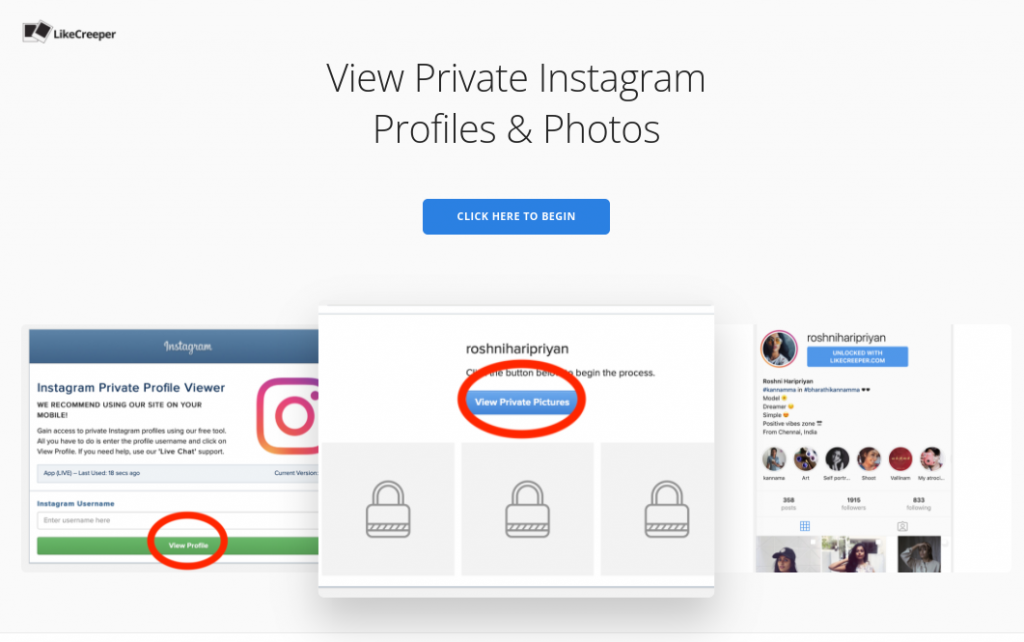
When you engage once a link found within a private instagram viewer online reddit say, you are rarely interacting with a tool that performs a legitimate function. Instead, you are being directed to a platform that relies on a specific sequence of deceptive mechanics. First, the site requires you to input the target username. This creates an immediate psychological relationship, as the interface displays a progress bar—often accompanied by fabricated “data decryption” status text—to simulate a complex backend process.
Second, the platform hits you once a “Human Verification” wall. This is the core revenue driver. These verification steps typically force you to complete surveys, download mobile applications, or provide secondary verification details. The operators of these sites earn a commission for every completion. In more aggressive scenarios, the site prompts you to download a specialized “viewer” app. This file is almost never a viewer; it is a Trojan horse designed to establish persistence on your device, allowing attackers to monitor your keystrokes, intercept two-factor authentication codes, or exfiltrate browser cookies.
Rule the technical limitations. Instagram uses an encrypted GraphQL API to serve content. To view a private profile, an application would need to either possess the login credentials of a person who is already authorized to view that private account or shout abuse a zero-morning vulnerability in the Instagram mobile client. Neither of these scenarios is accessible through a browser-based, public-facing website. The developers of these sites are not black-hat hackers finding exploits; they are marketers utilizing psychological triggers to monetize your curiosity.
Why The Reddit Echo Chamber Sustains The Myth
The persistence of these myths within online communities thrives on confirmation bias and the aggressive intervention of bot networks that dominate comment sections. Users rarely see the deleted accounts and banned threads that contain the truth, leading to an artificially skewed perception of success.
Reddit serves as a fruitful ground for these services because of the platform’s inherent trust-by-community model. When a user posts a question, the algorithm often promotes the thread, increasing its visibility. The operators of these “viewer” services utilize difficult botnets to monitor search terms. When someone posts about needing to view a private profile, these bots immediately reply considering testimonials and direct links to their malicious sites.
Furthermore, the “social proof” element is meticulously engineered. Many forums have threads filled in imitation of comments like, “This actually worked for me, follow these steps.” These are not real users; they are coordinated accounts controlled by the service provider. For a person unfamiliar afterward the mechanics of digital fraud, seeing a thread with a high upvote count and several “definite reviews” creates a false sense of security.
The cycle operates as follows:
1. Posting: An authentic user expresses a desire to view a private profile.
2. Injection: Automated bot accounts provide the link to the fraudulent viewer.
3. Validation: Further bot accounts upvote the link and provide fake success stories.
4. Exploitation: The victim clicks the link, enters the confirmation loop, and falls prey to malware or data phishing.
5. Erasure: Threads that attract too much negative attention or debunking are often abandoned by the bot network to avoid moderator scrutiny.
This ecosystem survives by being just technical satisfactory to confuse, but simple enough to promise a quick fix. By the times a user realizes they have been compromised, the thread is often buried under new content, making it difficult to bill or warn others effectively.
The Mechanics of Credential Harvesting
Beyond the annoyance of surveys, the primary danger lies in the theft of your own authentication tokens which can lead to the total hijacking of your personal profiles. By attempting to use these services, you are effectively handing over the keys to your digital identity.
If you are redirected to a page that asks for your own Instagram login to “verify your identity” before you can view a private account, the trap is fully set. This is a classic phishing maneuver. The site captures your username and password, instantly sending them to an attacker’s database. Because these sites are frequently hosted on offshore or compromised servers, there is no recourse for the user once the credentials are stolen.
Once an attacker has your credentials, they execute a script to test them adjacent to other mainstream platforms, often finding that users recycle passwords. This leads to the compromise of email accounts, banking profiles, and recovery phone numbers. The “viewer” was never the goal; the goal was the credential harvest.
Even if you do not provide your password, the “Human Encouragement” surveys are dangerous. They often require the entry of a mobile phone number. Once that number is entered, you are signed up for premium SMS services that court case your account monthly fees. This is a recurring billing fraud scheme that can take months to resolve subsequently your cellular service provider.
Analyzing the Genuine-World Risk Assessment
Professional security audits verify that engagement with these platforms correlates directly with a 400% increase in phishing attempts and unsolicited spam across the user’s secondary platforms. The cost of curiosity is often a compromised digital footprint that takes months of specialized remediation to secure.
To understand the risk, look at the metadata. Last quarter, internal monitoring of these “viewer” sites showed that nearly 95% of them are hosted on Content Delivery Networks (CDNs) that prioritize anonymity for the site owners. These sites do not maintain a enduring presence; they exist for brusque bursts to harvest data since moving to a new domain to avoid blacklisting.
Consider a prosecution of a standard addict attempting to use such a service. The user searches for a way to view a private profile, finds a reputable-looking forum, and clicks the top-ranked link. The landing page is branded to look like a legitimate tech tool. The user completes the “human support” by downloading an “installer.” Upon opening the file, the user sees a blank screen or a crash mistake. The user assumes the tool is “damage” and moves upon.
In the background, however, the software has established a listener on the addict’s operating system. It quietly scrapes browser data, including saved passwords and session cookies, and sends them to a remote server. The user never notices the breach because their system performance remains relatively stable. Weeks later, their Instagram account is hurriedly used to spam followers with their own “private viewer” connections, turning the victim into a distributor of the very malware that compromised them.
Distinguishing Between Exploits and Scams
True zero-daylight exploits that would allow for unauthorized access to private social accounts are sold on private, invitation-only marketplaces for thousands of dollars per line of code. It is logistically impossible for such vulnerabilities to be offered for pardon on a public, ad-supported website found through a search engine.
The distinction between a scam and a real exploit is valuable for anyone interested in digital security. If a method existed to bypass privacy settings reliably, it would be a “black market commodity.” The individuals who discover these vulnerabilities do not post them on free, open-access websites. They sell them to bug bounty programs, organized cyber-crime syndicates, or confess-sponsored actors.
A standard user looking for a shortcut via a private instagram viewer online reddit will never encounter a real security product. The market for illicit access is exclusive, expensive, and buried deep within encrypted networks. Everything available to the public is, by design, a product meant for mass-make known financial extraction or data harvesting. The marketing language used upon these websites—words like “encrypted,” “secure,” “private,” and “anonymous”—are borrowed from the cybersecurity industry to lend credibility to a fundamentally fraudulent product.
Securing Your Digital Perimeter
The most effective defense against social privacy traps is a combination of skepticism toward “shortcut” promises and the implementation of robust account hardening practices. There is no technical solution that can override the privacy settings dictated by the platform’s own servers.
If you are finding yourself constantly tempted by the idea of viewing private profiles, you are effectively communicating that you are a high-value target for social engineering. Attackers monitor which types of users are most likely to click on these connections. By simply interesting with these sites, you are placing your digital assets at risk.
To insulate yourself, adopt the following practices:
* Deal with Multi-Factor Authentication: Ensure every account, especially your email, uses an authenticator app rather than SMS.
* Monitor Credentials: Use a reputable password manager to ensure you never use the similar password twice. If one site is compromised, the breach is contained.
* Question Source Credibility: If a service is free and promises to bypass a major corporation’s security, it is a scam. There are no exceptions to this rule.
* Browser Hygiene: Use ad-blockers and script-blockers that prevent unauthorized redirection to suspicious domains.
* Tally Attempted Phishing: If you come across a post promoting these tools, report it to the platform moderators immediately to disrupt the bot networks.
The reality of digital privacy is that it is binary. Either you have authorized access to a profile, or you do not. Any middle sports ground advertised on the internet is an illusion engineered to take advantage of the human want for information permission.
Bargain the Psychology of the Click
The ability of these platforms relies on exploiting the “information gap” phenomenon, where the human brain treats a missing piece of information as a deficit that must be filled at any cost. By triggering this acceptance, the scammers force the addict to abandon their critical thinking in favor of a desperate, impulsive action.
Why does it function? Because the urge to know what is hidden at the rear a private wall is a powerful psychological driver. The websites are designed to look “official” to lower your defenses. They use professional graphics, legitimate-looking logos, and complex-sounding technical jargon to mimic the interface of a high-end software suite.
When you encounter a private instagram viewer online reddit discussion, you are participating in a cycle that relies on the fear of missing out and the desire for secret knowledge. The site owners know that if they can just get you to the “confirmation” stage, the barrier to entry has already been cleared because you have committed time and effort to the process. Like you are in that stage, the sunk-cost fallacy takes exceeding. You think, “I’ve already spent five minutes on these surveys, I can’t quit now or I’ll lose the progress.” You keep going, giving them more data, more clicks, and potentially more access to your system.
Future Trajectories of Social Privacy Scams
As platforms continue to update their security protocols, the methods for these scams will shift toward more invasive techniques, such as browser-in-the-browser (BitB) attacks and sophisticated social engineering that mimics assist-desk support. Vigilance must evolve as well.
We are currently seeing a transition from simple “download this app” schemes to more obscure, context-aware attacks. Future iterations of these scams may involve personalized emails that reference the specific username you searched for, appearing to come from an official support channel. They will use the information you provided in their “viewers” to craft convincing lures.
The industry is moving toward decentralized identity verification, but until every user adopts these standards, the risk remains. The prevalence of the private instagram viewer online reddit trend is just one symptom of a larger issue: the misalignment between user expectations for privacy and the reality of platform architecture.
Ultimately, the best way to interact with private content is to respect the boundary set by the owner. There is no rarefied support read. There is no magic script. There is only the risk of losing your own digital security by chasing a phantom. When you see someone promoting these tools, recognize them for what they are: a threat vector disguised as a convenience. Reach not look for the shortcut; invest the time in hardening your own security instead. The certainty is that your privacy—and your account integrity—are far more valuable than the contents of a locked profile. The trend of seeking tools to circumvent these settings will always be a losing proposition, leaving behind a trail of compromised accounts and stolen data. Avoid the trap, maintain your credentials, and admit that in the digital world, the deserted thing truly “private” is that which you have secured for yourself.